You know how in each season you're trying to find just the right mix of songs that fits your mood without overplaying them like they do on the radio? In lieu of options like making new playlists on your media player of choice or letting Pandora find some new stuff for you, one of the new tools I've found is 8Tracks.com. They're user created playlists which are updated regularly and provide a quick and dirty solution to the perfect mix you're looking for on short notice.
My favorite right now is a station called Summer Country, hope you enjoy it!
Tuesday, June 28, 2011

Monday, June 6, 2011
Le Petit Prince
par Antoine de Saint-Exupéry

So the other night I decided to go back and reread one of my favorite books of all time, The Little Prince by Antoine de Saint-Exupéry. In high school I originally read it in French, and to get the full effect of the imagery and humor, that's how it should be read. In the essence of time, however, I decided to read through the English translation and look up my favorite quotes in French.


The main idea of the story revolves around the author's encounter with a young prince who lives by himself on an asteroid, but has gone exploring. Through this encounter as well as flashbacks to the author's youth, the book illustrates the ridiculousness of what adults consider "matters of consequence." Rather the little prince teaches the author the value of a single rose who depends on you, and the responsibility you have for that which you have tamed. Tu deviens responsable pour toujours de ce que tu as apprivoisé.

So, if anyone ever shows you a picture of what appears to be a hat, ignore your eyes and try to see the boa eating an elephant. If you are shown a picture of a box, remember the little sheep inside. Il est très simple : on ne voit bien qu'avec le coeur. L'essentiel est invisible pour les yeux.

Note: Illustrations are originals from Le Petit Prince and obtained from the online text.
Sunday, August 8, 2010
This ain't no love song
"I just felt like gettin' my guitar on and singin' a tune, singin' about you. Yeah, feeling good and tappin' my shoes."
As much as I love songs about breakups, lost loves, being a redneck and having big pickup trucks, it's always nice to hear a new theme to a country tune. Songs have always been used to express emotions or ideas, but rarely do you hear a popular song written about music.
At first listen, I hear a guy who needs to sing because he just has the itch to tap his toe and feel those chord progressions resonate down to his soul. The verses tell about how he's singing to her because he needs a subject, not because he's falling for her. My girlfriend thought the way he presented it was quite insulting, but then again, intentions are usually misunderstood and the guy usually ends up in trouble.
Unfortunately, my interpretation of this song was cracked by the music video. Trace spends the whole song singing to her as she seduces him from the bed. I thought, well maybe he's resisting her temptations by just writing this song about singing for the sake of music. But then I saw an interview with Trace on CMT where he explains how the song was actually a tongue-in-cheek love song similar to George Strait's "Ocean Front Property"
So, for me at least, this song transformed from an innovative, fresh take on country to just another pretty good song for the radio. I still like it, but it doesn't hold the same epic place in my music library that it initially did. However, the chord progressions in Dierks Bentley's "Up on the Ridge" are still incredible. That one is still holding its ground.
Tuesday, August 3, 2010
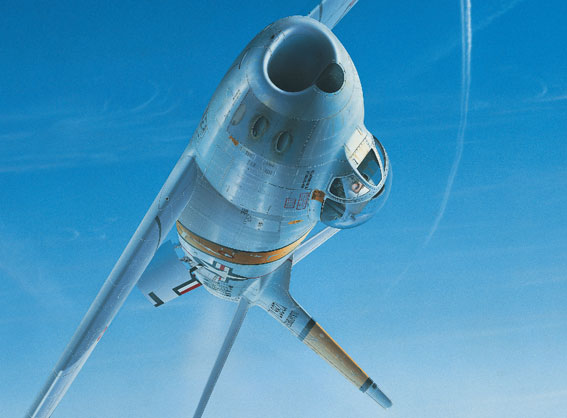
Spin Recovery

Monday, August 2, 2010
Feline Monologue
So I'm sitting on the couch in my girlfriend's new apartment surrounded by half empty boxes and half decorated walls. In one corner there is a six foot kitty tree with Zoe, my girlfriend's cat, elegantly gazing out the window from the top perch. She has the grace of a dancer and the poise of a regent as she surveys her new domain.


At the other end of the room is my orange tabby, Rousseau, flopped on the kitchen counter. Throughout the moving and unpacking, he remains remarkably unconcerned about anything, save the stray millipede scuttling across the floor.
It is at this point I wonder what is going through each of their minds as they watch me going about my business, whether it be unpacking and rearranging Kelly's new apartment, or lying in a semi-comatose state on the couch with the History Channel droning in the background. Throughout the day we have thousands of things going through our mind, even excluding the subconscious decisions we make just to function.
What's for dinner? Do I have a test next week? Is it raining outside? Who is running for Senate?
Cats have none of these things to worry about. All they do all day is sleep and watch you. They know every corner of their world and do their best to manipulate it to maximize their comfort.
But anyways, back to my cats...
Zoe turns her head so slowly you expect it to creak. She stares you down as if asking you to come over and skritch her chin. Running through her mind is an analysis of your behavior since you walked through the front door, the time since she was last fed, the presence of other people in the house, and the weather outside. She is taking all this into account to predict her chances of getting food and attention at a given point in time. This is what her life revolves around, all the while she acts as though the world revolves around her.
I stand up and walk into the kitchen to grab a glass of water. The sound of the cupboard opening shocks Rousseau to life and he is immediately focused on every one of your movements. There is a key difference though in the observations of Rousseau and Zoe. Whereas Zoe seems to be trying to analyze patterns and predict movements, Rousseau is simply gauging his excitement based on your proximity to him and the food bag. In fact, I rather picture his thought process as being similar to the vuvuzela symphony from the World Cup in South Africa. His blank stare betrays his total inability to plot and scheme, which in my opinion makes him the perfect cat, much like a hound dog actually.
So, in summary, Zoe and Rousseau are a lot like Pinky and the Brain:
Zoe: "Fuzzles, are you pondering what I'm pondering?"
Rousseau: "Bzzzzzzzzzzzzzzzzzzzzzzzzzzz."
Zoe: "Ugh."
Friday, July 23, 2010
Barefoot Running
So, in an effort to work out some on my day off, I decided to take a little jog around the apartment complex. I also decided that I would do it barefoot, for the sake of experimentation after reading quite a few articles about the benefits of it.
Skip ahead twenty minutes.
I am now back on my couch with my feet on wet washcloths remembering the summers of skipping across the parking lot to the pool because pavement reaches a sultry 125 degrees when left out in the Florida sun. This experience once again revived my desire to get a pair of the Vibram's Five Finger shoes. Call me a wimp, sure, but unfortunately my school required us to wear shoes so we were unable to develop our own leather soles on our feet.
I guess for now I'll just stick with the shoes, or maybe find a nice patch of grass to go barefoot on for a while. I can probably deal with the allergies better than the blistering heat.
Wednesday, July 21, 2010
Berlin Philharmonic
This is one of my favorite songs ever for horn ensemble, "Farewell to Red Castle" by Kerry Turner as performed by the Berlin Philharmonic horn choir.
Wednesday, September 23, 2009
More Good Habits

So after another extended absence from my blog, I have decided to start back up again. This is part of my plan to get refocused and back on track. I'm going to start working out consistently again, if only because of a challenge to be carried out at Christmas. I'm also going to change my diet for real this time.
I'm also making sure I keep in line when it comes to my schoolwork. I'm rapidly approaching graduation and need to pull together a complete package of academics and extracurriculars to make myself marketable.
So, I'm back, and need to be harassed if I disappear again.
-Zach
Monday, March 2, 2009
Friends don't let friends dive air
Yesterday night I finally completed my Recreational Nitrox class. This allows me to get fills and use Nitrox mixes of up to 40% oxygen when I go diving. I figured since maybe one person that reads my blog is a diver I would explain the basic principles behind this and gas management in general.
When you first get certified as an open water diver, almost everyone learns while on compressed air. This consists of 21% oxygen, 78% nitrogen, and <1% other stuff (argon, CO2, hydrogen, etc.). We are taught to dive within what are called No-Decompression Limits (NDL). This name is in fact misleading, as all dives are decompression dives to some extent. The point of the NDL is that you can ascend safely to the surface without mandatory decompression stops with minimum risk of decompression sickness (DCS), more commonly known as the Bends.
The basic premise behind DCS is a law of physics called Henry's Law. Henry's Law states that as the partial pressure of a gas increases, it's solubility in liquid, in this case blood, increases proportionately. This becomes an issue with nitrogen as you spend time at depth and the amount of nitrogen absorbed into your tissue increases. As you ascend, the pressure decreases again and the nitrogen comes out of solution. When diving within NDL and ascending slowly, less than about 15 feet/min, the size of the bubbles coming out of solution are sufficiently small to usually avoid causing any problems. However, beyond NDL or with too rapid an ascent, larger bubbles can collect in joints, under the skin, or worst case scenario, in the brain, subsequently causing the symptoms of DCS.
Where Enriched Air Nitrox (Nitrox) comes in is increasing these no-decompression limits. With a higher percentage of oxygen in the mix, there is also less nitrogen. The lower nitrogen content of the mix means there is a lower partial pressure at depth, and slower absorption into the tissue. Therefore you can spend more time down with the same effect, or the same amount of time down with less effect from nitrogen than if you were on air. Non-harmful effects of nitrogen include narcosis, which is similar to mild anaesthesia at depth, as well as a nitrogen "hangover" afterwards.
Contrary to what many people think, Nitrox does not allow you to dive deeper. It is actually classified as a mid-level gas, most useful from around 60 feet down to around 110 feet based on what mix you use. Beyond those limits you actually run the risk of oxygen toxicity. This is caused when the partial pressure of oxygen in the mix exceeds around 1.6 atmospheres, or 1.6 times the pressure exerted by air at sea level. Oxygen at high enough pressures is actually extremely dangerous and can even cause convulsions. For this reason, when diving Nitrox, you must be aware of the maximum operating depth of your mix. This is a concern not often covered with air, because the MOD of that is around 190 feet, well beyond the scope of recreational diving. However, when used with care and proper planning, Nitrox can make for a very enjoyable and safe dive.
Just remember, friends don't let friends dive air.
-Z
When you first get certified as an open water diver, almost everyone learns while on compressed air. This consists of 21% oxygen, 78% nitrogen, and <1% other stuff (argon, CO2, hydrogen, etc.). We are taught to dive within what are called No-Decompression Limits (NDL). This name is in fact misleading, as all dives are decompression dives to some extent. The point of the NDL is that you can ascend safely to the surface without mandatory decompression stops with minimum risk of decompression sickness (DCS), more commonly known as the Bends.
The basic premise behind DCS is a law of physics called Henry's Law. Henry's Law states that as the partial pressure of a gas increases, it's solubility in liquid, in this case blood, increases proportionately. This becomes an issue with nitrogen as you spend time at depth and the amount of nitrogen absorbed into your tissue increases. As you ascend, the pressure decreases again and the nitrogen comes out of solution. When diving within NDL and ascending slowly, less than about 15 feet/min, the size of the bubbles coming out of solution are sufficiently small to usually avoid causing any problems. However, beyond NDL or with too rapid an ascent, larger bubbles can collect in joints, under the skin, or worst case scenario, in the brain, subsequently causing the symptoms of DCS.
Where Enriched Air Nitrox (Nitrox) comes in is increasing these no-decompression limits. With a higher percentage of oxygen in the mix, there is also less nitrogen. The lower nitrogen content of the mix means there is a lower partial pressure at depth, and slower absorption into the tissue. Therefore you can spend more time down with the same effect, or the same amount of time down with less effect from nitrogen than if you were on air. Non-harmful effects of nitrogen include narcosis, which is similar to mild anaesthesia at depth, as well as a nitrogen "hangover" afterwards.
Contrary to what many people think, Nitrox does not allow you to dive deeper. It is actually classified as a mid-level gas, most useful from around 60 feet down to around 110 feet based on what mix you use. Beyond those limits you actually run the risk of oxygen toxicity. This is caused when the partial pressure of oxygen in the mix exceeds around 1.6 atmospheres, or 1.6 times the pressure exerted by air at sea level. Oxygen at high enough pressures is actually extremely dangerous and can even cause convulsions. For this reason, when diving Nitrox, you must be aware of the maximum operating depth of your mix. This is a concern not often covered with air, because the MOD of that is around 190 feet, well beyond the scope of recreational diving. However, when used with care and proper planning, Nitrox can make for a very enjoyable and safe dive.
Just remember, friends don't let friends dive air.
-Z
Thursday, February 19, 2009
You can't just drop back and punt it
With regards to how much of our dynamics and differential equations classes it appears my classmates and I retained, this is an oft used quote by my vibrations professor. I bring this up mostly because this class is probably the best engineering class I have ever taken. To this point it is also the hardest engineering class I have ever taken.
Why? Is the material so much different from other classes I've taken? No, it's actually quite similar to other classes I've taken. It is mainly modeling systems, developing a differential equation, then setting up the equation so it is solvable, at least within reasonable approximation. By my count I've had three courses directly dealing with these subjects, not to mention the math classes leading up to them.
Perhaps I'm too overloaded this semester? No, actually this is the easiest semester of my college career scheduling wise. I intentionally set up my schedule to give myself a solid footing at a new school so I can push through to the finish. I knew I had labor intensive classes this semester, so in addition to working out a favorable class schedule, I am also not working this semester.
Well then why is it so hard, you ask? It is mainly because of this professor. No, not because he doesn't know what he's talking about. He knows it inside and out and I am extremely impressed. Nor is it a language barrier similar to a couple I have encountered in the past. Rather it is his teaching style. It is markedly different from every other teacher I have had thus far in my engineering career. It is taking quite a bit of getting used to, but I do believe if more professors taught using the methods of Dr. Anil Rao, the world would be better for it.
The fundamental difference comes in the distinction between getting an answer and getting a solution. Engineering students are taught, pretty much from the start of elementary school, that they need to get the same answer that is in the back of the book. I myself have done this many times where I'm not quite sure what is going on in a problem, but if I plug the given information into enough different given equations, eventually I'm going to get the answer I'm supposed to. But what does that answer tell me? Absolutely nothing. Could I explain to somebody why I got that answer and why what I did was right? What a preposterous idea. If given another problem could I identify similarities and use that knowledge to help me instead of doing the whole stupid plug and chug process again? Don't I wish. Therein lies the fatal flaw in the way most engineering classes are taught.
What Dr. Rao requires of us is to take every step, from step zero to step seven hundred and work it out in gory detail, every time. But doesn't that take more time? Naturally, but when I get a solution at the end, I know it is right, I know why it is right, and I can show you every step I did to prove it is right rather than basing it on a sheet full of equations the teacher gave us from the book. After doing several of these problems you also get another revelation: all of these problems are the same. But surely that can't be true! It is true and don't call me Shirley. You model the system making appropriate assumptions and simplifications, justifying each of them. This includes defining reference systems that not only describe the system well, but omigosh, they make the math and subsequently your life much easier. You decide which law you are going to use to describe what you need to, lately it has been Euler's Laws for rigid body motion (that's what she said), then derive all the information needed to solve it. Drop it into a differential equation and solve. Poof, done.
I know, that sounded exceedingly complicated and probably made a couple of the liberal arts majors want to cry, it really isn't as bad as it sounds, and can really be quite interesting. Each time I walk out of that class, it feels like information overload, but I know as I process it all, it is going to help me be a better engineer, rather than having to figure that out down the road when my mentor tells me I have no justification whatsoever in my thesis and not to come back until I can explain what I did instead of hiding it in a bunch of technical jargon.
It kind of goes back to "If you didn't have time to do it right the first time, how on earth are you going to find time to do it again to fix it?" It's all about thoroughness. Do it right, it works out. That's one of the nice things about engineering. I wish more stuff was like that.
So goodnight y'all. Fait des beaux reves.
-Z
Why? Is the material so much different from other classes I've taken? No, it's actually quite similar to other classes I've taken. It is mainly modeling systems, developing a differential equation, then setting up the equation so it is solvable, at least within reasonable approximation. By my count I've had three courses directly dealing with these subjects, not to mention the math classes leading up to them.
Perhaps I'm too overloaded this semester? No, actually this is the easiest semester of my college career scheduling wise. I intentionally set up my schedule to give myself a solid footing at a new school so I can push through to the finish. I knew I had labor intensive classes this semester, so in addition to working out a favorable class schedule, I am also not working this semester.
Well then why is it so hard, you ask? It is mainly because of this professor. No, not because he doesn't know what he's talking about. He knows it inside and out and I am extremely impressed. Nor is it a language barrier similar to a couple I have encountered in the past. Rather it is his teaching style. It is markedly different from every other teacher I have had thus far in my engineering career. It is taking quite a bit of getting used to, but I do believe if more professors taught using the methods of Dr. Anil Rao, the world would be better for it.
The fundamental difference comes in the distinction between getting an answer and getting a solution. Engineering students are taught, pretty much from the start of elementary school, that they need to get the same answer that is in the back of the book. I myself have done this many times where I'm not quite sure what is going on in a problem, but if I plug the given information into enough different given equations, eventually I'm going to get the answer I'm supposed to. But what does that answer tell me? Absolutely nothing. Could I explain to somebody why I got that answer and why what I did was right? What a preposterous idea. If given another problem could I identify similarities and use that knowledge to help me instead of doing the whole stupid plug and chug process again? Don't I wish. Therein lies the fatal flaw in the way most engineering classes are taught.
What Dr. Rao requires of us is to take every step, from step zero to step seven hundred and work it out in gory detail, every time. But doesn't that take more time? Naturally, but when I get a solution at the end, I know it is right, I know why it is right, and I can show you every step I did to prove it is right rather than basing it on a sheet full of equations the teacher gave us from the book. After doing several of these problems you also get another revelation: all of these problems are the same. But surely that can't be true! It is true and don't call me Shirley. You model the system making appropriate assumptions and simplifications, justifying each of them. This includes defining reference systems that not only describe the system well, but omigosh, they make the math and subsequently your life much easier. You decide which law you are going to use to describe what you need to, lately it has been Euler's Laws for rigid body motion (that's what she said), then derive all the information needed to solve it. Drop it into a differential equation and solve. Poof, done.
I know, that sounded exceedingly complicated and probably made a couple of the liberal arts majors want to cry, it really isn't as bad as it sounds, and can really be quite interesting. Each time I walk out of that class, it feels like information overload, but I know as I process it all, it is going to help me be a better engineer, rather than having to figure that out down the road when my mentor tells me I have no justification whatsoever in my thesis and not to come back until I can explain what I did instead of hiding it in a bunch of technical jargon.
It kind of goes back to "If you didn't have time to do it right the first time, how on earth are you going to find time to do it again to fix it?" It's all about thoroughness. Do it right, it works out. That's one of the nice things about engineering. I wish more stuff was like that.
So goodnight y'all. Fait des beaux reves.
-Z
Wednesday, February 18, 2009
A picture is worth a thousand words
What makes a great picture? What makes a picture not only catch the eye, but also have an impact on the soul? When does a picture tell a story instead of just recording an event? These are really questions that can be debated ad nauseum, but as a general rule, a picture can't be great before it is good. This aspect I can comment on.
When someone looks at one of my pictures and says, "Wow, those are good! You must have an awesome camera." I want to punch them. You wouldn't associate a painting with how good the brushes are, or the taste of a meal with how good the pots and pans are. Why would you do the same thing with photography? It is true, it is easier to take good photographs when you are using better equipment. But, it is also true that you could hand me a $50,000 Hasselblad and hand Ansel Adams a $200 point and shoot and he would outshoot me any day of the week, and he's dead!
There is still a large amount of skill involved in taking a good picture. Advances in technology have brought up the baseline so it is easier for more people to take passable pictures without thinking about it. This also means that to distinguish themselves, the top echelon of photographers also has to improve to justify getting paid for their work. Occasionally someone with a point and shoot will take an awesome picture under good shooting conditions. The separation comes when a photographer is contracted to take many good pictures on a specific day no matter what the shooting conditions. The consistency and ability to perform no matter what is where the skill and training come in, with a little help from equipment.
The basis of all photography really goes back to an understanding of light. Light is like sound for a musician. Light is like ingredients to a cook. Light is like words to a poet. Without an understanding of how it works, it is impossible to use it to its full potential. The hardest thing to wrap your mind around is the quality of light. It is not an absolute scale, nor is it even a one-dimensional scale. It deals with many aspects of light, such as intensity, direction, contrast, color, variability, and consistency. Some of these qualities are more important than others and where in that scale you want to be depends on the type of shooting you are doing. What may be ideal light conditions for a senior portrait of a teenage girl may yield a flat, uninteresting shot of a racecar on the track. Even within the same type of shooting, portraits for example, the desired qualities may change. The lighting setup for the lead singer of a heavy metal band would probably make a middle-aged soccer mom want to cry.
There isn't really one cohesive idea that runs through this post. Actually, it's a rather scattered collection of thoughts loosely connected by a camera, but it gives me something to do in between classes that breaks up the studying. For those that know me well, you probably followed this post like one of our conversations, all over the place, but you got the general idea. For those of you that don't think like me, I'm quite sorry and if you need me to clarify I am more than happy to do that too. Hope everybody has a great day. Au revoir.
-Z
When someone looks at one of my pictures and says, "Wow, those are good! You must have an awesome camera." I want to punch them. You wouldn't associate a painting with how good the brushes are, or the taste of a meal with how good the pots and pans are. Why would you do the same thing with photography? It is true, it is easier to take good photographs when you are using better equipment. But, it is also true that you could hand me a $50,000 Hasselblad and hand Ansel Adams a $200 point and shoot and he would outshoot me any day of the week, and he's dead!
There is still a large amount of skill involved in taking a good picture. Advances in technology have brought up the baseline so it is easier for more people to take passable pictures without thinking about it. This also means that to distinguish themselves, the top echelon of photographers also has to improve to justify getting paid for their work. Occasionally someone with a point and shoot will take an awesome picture under good shooting conditions. The separation comes when a photographer is contracted to take many good pictures on a specific day no matter what the shooting conditions. The consistency and ability to perform no matter what is where the skill and training come in, with a little help from equipment.
The basis of all photography really goes back to an understanding of light. Light is like sound for a musician. Light is like ingredients to a cook. Light is like words to a poet. Without an understanding of how it works, it is impossible to use it to its full potential. The hardest thing to wrap your mind around is the quality of light. It is not an absolute scale, nor is it even a one-dimensional scale. It deals with many aspects of light, such as intensity, direction, contrast, color, variability, and consistency. Some of these qualities are more important than others and where in that scale you want to be depends on the type of shooting you are doing. What may be ideal light conditions for a senior portrait of a teenage girl may yield a flat, uninteresting shot of a racecar on the track. Even within the same type of shooting, portraits for example, the desired qualities may change. The lighting setup for the lead singer of a heavy metal band would probably make a middle-aged soccer mom want to cry.
There isn't really one cohesive idea that runs through this post. Actually, it's a rather scattered collection of thoughts loosely connected by a camera, but it gives me something to do in between classes that breaks up the studying. For those that know me well, you probably followed this post like one of our conversations, all over the place, but you got the general idea. For those of you that don't think like me, I'm quite sorry and if you need me to clarify I am more than happy to do that too. Hope everybody has a great day. Au revoir.
-Z
Tuesday, December 16, 2008
Concerning Photography
The question has been raised earlier this week as to classifying a photographer as pro, amateur, sub-amateur, etc. As I was called out in said post, I felt compelled to respond in kind. Yes, I know I haven't finished the posts from the wedding or El Salvador. Chill, I have one final left before Christmas break, then I'll get rolling again.
What is a "Pro" photographer? What is an "Amateur" photographer? Perhaps we might even have to start more basic than that with what is a "photograph"? This is a question I often pose my customers looking at SLR cameras when I'm actually supposed to just be selling them a camera. In my mind, there is a significant difference between a "snapshot" and a "photograph". To me, a photograph indicates a conscious effort to analyze the composition of the photograph, be aware of elements in the background that may be distracting, get the focus correct, and last but not least, expose the picture correctly. When you take these elements into account, you begin creating art instead of letting the camera capture what it may. At this point you are taking control of the camera and light and manipulating how you see and capture them to create a desired image. Now, this is not to say you must know how a given picture is going to turn out after you press that little button, but it generally helps to have some idea, even if it's an idea of how to do trial-and-error adjustments for the shot you're about to do.
Now, given that definition, what is a photographer? I believe a photographer is someone who continually strives to better the photographs he or she creates. Whether it is through shooting, or reading, or observing another photographer, you are trying to create the most accurate representation of your idea possible. Ask any photographer if they have ever created the perfect picture. Unless they are extremely arrogant or extremely naïve, they will probably say no. But that does not mean there are not excellent photographs out there. What would be the point of doing something if you could never do it well?
Now the designation of a professional vs amateur is also very vague. A professional has a rather strict definition when it comes to careers, including mainly doctors, lawyers and military officers. But in a field such as golf, you become a professional as soon as you get paid to play. One of the greatest golfers who ever played, Robert Trent (Bobby) Jones, was an amateur his entire career. There is also a great deal of difference in skill between professional golfers on local circuits and Tiger Woods, Ernie Els and Arnold Palmer. People insist on assigning labels to things that are completely unrelated to what they are trying to judge. People often ask me at work if I am a professional photographer. I respond that I love taking photographs, I love studying and learning about photography, and I am available for hire for portraits, weddings and other events. I don't compare myself to Ansel Adams or Annie Leibovitz. Here is my card with my website at the bottom if you would like to take a look at my portfolio and judge for yourself whether you would consider me a professional.
Questions, comments, concerns? I know I haven't totally covered this topic and my explanation has been somewhat haphazard, but alas I am not getting paid to write this, nor am I getting a grade. I would still love to know what you think, but until then, I need to get some sleep so I can head back to Gainesville tomorrow to work and study.
-Z
What is a "Pro" photographer? What is an "Amateur" photographer? Perhaps we might even have to start more basic than that with what is a "photograph"? This is a question I often pose my customers looking at SLR cameras when I'm actually supposed to just be selling them a camera. In my mind, there is a significant difference between a "snapshot" and a "photograph". To me, a photograph indicates a conscious effort to analyze the composition of the photograph, be aware of elements in the background that may be distracting, get the focus correct, and last but not least, expose the picture correctly. When you take these elements into account, you begin creating art instead of letting the camera capture what it may. At this point you are taking control of the camera and light and manipulating how you see and capture them to create a desired image. Now, this is not to say you must know how a given picture is going to turn out after you press that little button, but it generally helps to have some idea, even if it's an idea of how to do trial-and-error adjustments for the shot you're about to do.
Now, given that definition, what is a photographer? I believe a photographer is someone who continually strives to better the photographs he or she creates. Whether it is through shooting, or reading, or observing another photographer, you are trying to create the most accurate representation of your idea possible. Ask any photographer if they have ever created the perfect picture. Unless they are extremely arrogant or extremely naïve, they will probably say no. But that does not mean there are not excellent photographs out there. What would be the point of doing something if you could never do it well?
Now the designation of a professional vs amateur is also very vague. A professional has a rather strict definition when it comes to careers, including mainly doctors, lawyers and military officers. But in a field such as golf, you become a professional as soon as you get paid to play. One of the greatest golfers who ever played, Robert Trent (Bobby) Jones, was an amateur his entire career. There is also a great deal of difference in skill between professional golfers on local circuits and Tiger Woods, Ernie Els and Arnold Palmer. People insist on assigning labels to things that are completely unrelated to what they are trying to judge. People often ask me at work if I am a professional photographer. I respond that I love taking photographs, I love studying and learning about photography, and I am available for hire for portraits, weddings and other events. I don't compare myself to Ansel Adams or Annie Leibovitz. Here is my card with my website at the bottom if you would like to take a look at my portfolio and judge for yourself whether you would consider me a professional.
Questions, comments, concerns? I know I haven't totally covered this topic and my explanation has been somewhat haphazard, but alas I am not getting paid to write this, nor am I getting a grade. I would still love to know what you think, but until then, I need to get some sleep so I can head back to Gainesville tomorrow to work and study.
-Z
Thursday, November 27, 2008
Arrival in El Salvador
I realized as I was writing the first draft of this post that it was turning into a essay, so I'm going to break this guy up into a few different posts with pictures. That ways you won't have to put aside an hour of your life to read about my adventures. Anyways, I flew in Tuesday night from El Salvador but just finished doing the preliminary run on the photos right now. We had such a blast down there, and I can't wait to go back.
My father arrived in San Salvador on Thursday afternoon because there was a parents' dinner the night before. Apparently that was interesting, but alas, I was not there so I can't really comment on it. I arrived the next afternoon and got a shuttle up to the Sheraton in San Salvador. My father and grandparents were on a tour so I called up Roger and Sandra and had them come over and pick me up. We were supposed to meet Dan and Anne so we could drive up to Ataco and spend the night, but while I had pulled up at the hotel about an hour after I landed, Dan and Anne had not arrived. Roger was getting a little worried because they had rented a car and therefore had a very high probability of getting incredibly lost.
While we waited, we drove back to Sandra's house to hang out for a little while. I met Sandra's mother again (I had first met her in Kansas City the year previous for the civil ceremony) and I also met her German Shepard mix, Oso.
After a very tense few hours, we finally got a call from a slightly frazzled Dan. They had finally found there way back to Villa Serena, the hotel they were staying at, about three hours behind schedule. Apparently they had skirted with the border of Guatemala before realizing where they were in relation to where they were supposed to be. The three of us piled back into Sandra's car and rode on over to the hotel. Along the way I pulled out my camera and started shooting away, simply because I could. It was a little difficult out the window of the car, but really I just wanted to look around.
Fifteen minutes later we rolled up in front of the hotel and were greeted by Dan and Anne. They were now standing behind their rental car because Dan refused to drive anymore that day, especially in that city. Understandable because the drivers in El Salvador are psycho. Good, I didn't see an accident the entire time I was there, but psycho nonetheless. Anne also pulled out a map so Sandra could show them where everything had gone wrong.
At this point it was just after 5PM, three hours after we were supposed to have left for Ataco to go up and spend the night. It was starting to get a little bit dark and the tour was supposed to return soon, so I opted out of heading up to Ataco and waited in the hotel for Dad, Grandpa and Grandma. I got a little hungry, so I decided to go walking to find some food. Well as I walked down the hall from my room, who do I run into but Dad coming out of the elevator? So we put some things back in the room, grabbed Grandpa and Grandma and went out to dinner at this little sandwich shop down the street.
Later that night Dad, Grandpa and I stopped into the hotel bar to get ourselves acquainted with the local fare. The Cerveza Nacional Pilsner is nice and light, and Suprema is also very good. We caught up on some of the news on the TV and then headed up to bed to be ready for the wedding the next day. Meanwhile, I couldn't sleep, so I dropped back down there a little later that night to check out their gin and tonics, once again very satisfactory.
I know, not an overly exciting first day, but I enjoyed it and there wasn't too much pressure so it allowed me to adjust to the country. The next three days, however, were when I fell in love with the country.
My father arrived in San Salvador on Thursday afternoon because there was a parents' dinner the night before. Apparently that was interesting, but alas, I was not there so I can't really
 comment on it. I arrived the next afternoon and got a shuttle up to the Sheraton in San Salvador. My father and grandparents were on a tour so I called up Roger and Sandra and had them come over and pick me up. We were supposed to meet Dan and Anne so we could drive up to Ataco and spend the night, but while I had pulled up at the hotel about an hour after I landed, Dan and Anne had not arrived. Roger was getting a little worried because they had rented a car and therefore had a very high probability of getting incredibly lost.
While we waited, we drove back to Sandra's house to hang out for a little while. I met Sandra's mother again (I had first met her in Kansas City the year previous for the civil ceremony)
 and I also met her German Shepard mix, Oso.
After a very tense few hours, we finally got a call from a slightly frazzled Dan. They had finally found there way back to Villa Serena, the hotel they were staying at, about three hours behind schedule. Apparently they had skirted with the border of Guatemala before realizing where they were in relation to where they were supposed to be. The three of us piled back into Sandra's car and rode on over to the hotel. Along the way I pulled out my camera and started shooting away, simply because I could. It was a little difficult out the window of the car, but really I just wanted to look around.
Fifteen minutes later we rolled up in front of the hotel and were greeted by Dan and Anne. They were now standing behind their rental car because Dan refused to drive anymore that day, especially in that city. Understandable because the drivers in El Salvador are psycho. Good, I didn't see an accident the entire time I was there, but psycho nonetheless. Anne also pulled out a map so Sandra could show them where everything had gone wrong.
At this point it was just after 5PM, three hours after we were supposed to have left for Ataco to go up and spend the night. It was starting to get a little bit dark and the tour was supposed to return soon, so I opted out of heading up to Ataco and waited in the hotel for Dad, Grandpa and
 Grandma. I got a little hungry, so I decided to go walking to find some food. Well as I walked down the hall from my room, who do I run into but Dad coming out of the elevator? So we put some things back in the room, grabbed Grandpa and Grandma and went out to dinner at this little sandwich shop down the street.
Later that night Dad, Grandpa and I stopped into the hotel bar to get ourselves acquainted with the local fare. The Cerveza Nacional Pilsner is nice and light, and Suprema is also very good. We caught up on some of the news on the TV and then headed up to bed to be ready for the wedding the next day. Meanwhile, I couldn't sleep, so I dropped back down there a little later that night to check out their gin and tonics, once again very satisfactory.
I know, not an overly exciting first day, but I enjoyed it and there wasn't too much pressure so it allowed me to adjust to the country. The next three days, however, were when I fell in love with the country.
Sunday, November 23, 2008
Travels
Let me start by saying that I've changed my mind and I really need to learn Spanish in addition to my French. However, this is not so I can get ahead in the job market or communicate with immigrants who haven't learned English yet. It is simply because I would love to spend more time in Central America learning about the country and culture, talking to the beautiful ladies they have down here, and so I can sing along with all the music down here.
I arrived in country on Friday afternoon, made it smoothly through customs and met up with the shuttle to the hotel. Upon checking into the hotel, I called Sandra's house to let Roger y Sandra know I was all set. They came and picked me up about an hour later, but nobody had heard from Dan and Anne yet, and we were getting a little worried. You see, they had rented a car at the airport rather than take the shuttle up to the hotel. Well 3 hours later, they finally called Sandra's house when they made their way back to the hotel. Apparently they had been making pretty good time towards Guatemala. =P . Anyways, since it was almost time for the other part of the group to get back from their tour, I opted to stay in San Salvador rather than going up to Ataco for the night. Went out to dinner with Dad, Grandpa and Grandma, then hung out and went to sleep at a pretty decent hour.
Roger y Sandra's wedding was today up in Ahuachupan, near Ataco, and the reception was at the Jardin de Celeste. Overall a very, very nice wedding. Sandra looked absolutely stunning, Roger looked sharp, and from my point of view everything went off without a hitch. I got a bunch of nice pictures from both the wedding and reception, but naturally I forgot my card reader for my camera, so they will be uploaded when I get home.
Tomorrow was going to be a rest day, but that was planned when Dad and I expected to be celebrating well into the morning hours, rather than stopping at 9PM, so instead I'm probably going to go work out tomorrow morning, find myself a coffee shop in town, and generally enjoy the city until we meet up with Roger y Sandra tomorrow night. Monday I think we're planning a beach trip, then flying home Tuesday before driving up to Gainesville for a 930AM fluids test on Wednesday. Fun fun.
All in all, I'm in love with this country and wish I had more time to stay here. I think I'm going to have to come visit again in the spring, preferably with more linguistic skill and some dive gear. =) . Hope everyone is having a great time and I'll see y'all in a couple days.
-Z
I arrived in country on Friday afternoon, made it smoothly through customs and met up with the shuttle to the hotel. Upon checking into the hotel, I called Sandra's house to let Roger y Sandra know I was all set. They came and picked me up about an hour later, but nobody had heard from Dan and Anne yet, and we were getting a little worried. You see, they had rented a car at the airport rather than take the shuttle up to the hotel. Well 3 hours later, they finally called Sandra's house when they made their way back to the hotel. Apparently they had been making pretty good time towards Guatemala. =P . Anyways, since it was almost time for the other part of the group to get back from their tour, I opted to stay in San Salvador rather than going up to Ataco for the night. Went out to dinner with Dad, Grandpa and Grandma, then hung out and went to sleep at a pretty decent hour.
Roger y Sandra's wedding was today up in Ahuachupan, near Ataco, and the reception was at the Jardin de Celeste. Overall a very, very nice wedding. Sandra looked absolutely stunning, Roger looked sharp, and from my point of view everything went off without a hitch. I got a bunch of nice pictures from both the wedding and reception, but naturally I forgot my card reader for my camera, so they will be uploaded when I get home.
Tomorrow was going to be a rest day, but that was planned when Dad and I expected to be celebrating well into the morning hours, rather than stopping at 9PM, so instead I'm probably going to go work out tomorrow morning, find myself a coffee shop in town, and generally enjoy the city until we meet up with Roger y Sandra tomorrow night. Monday I think we're planning a beach trip, then flying home Tuesday before driving up to Gainesville for a 930AM fluids test on Wednesday. Fun fun.
All in all, I'm in love with this country and wish I had more time to stay here. I think I'm going to have to come visit again in the spring, preferably with more linguistic skill and some dive gear. =) . Hope everyone is having a great time and I'll see y'all in a couple days.
-Z
Thursday, November 20, 2008
Philosophy of Diving
OK, so perhaps I jumped into the details too quickly on that last post. I apologize, I just started writing about the first thing that came to my head when I was going to write an article about learning to dive, Rule number 1 seemed a natural place to start. But now I realize I must go back even farther for people to understand why I dive.
Aside from the television shows and movies you see growing up with divers jumping in the water and blowing up sharks with oxygen tanks, my first real encounter with diving was in high school. My freshman biology teacher, Mr. Lopatka, sponsored a Spring Break dive trip to Bimini each year. I would have loved to go on those trips, but alas, we never really had the money for me to take them (I kind of used up my share going to Ireland in '01). Nevertheless, a young lady who would eventually become one of my closest friends did get certified as a PADI Open Water diver and began furthering her diving education.
And so it passed, high school went on and was a good time for the most part. I made some awesome friends, watched three kickass football seasons, played horn under 3 different directors and 2 principals, but never did learn how to dive. That's all good, there's not much diving at the US Air Force Academy anyways. Now the Academy was an experience in itself, and there's a whole blog about that here so I will not get into the gory details. I was signed up to take a dive class my firstie year, but never got that far before I left the Academy and returned to Florida.
I took a semester off and began working at Best Buy to get a little spending cash until I went back to school. Well it turns out that I really like cameras, and I'm genetically predisposed to talking to everyone I meet, so Best Buy worked out rather well. I continued working there while I went to school at UCF in the spring, then upon my acceptance to UF for fall semester I transferred up to the Gainesville store and started working there over the summer.
Enter my new supervisor, Lance Briner, new to the camera business as well as new to Best Buy. It's all good, I'm more than happy to pass on knowledge I've acquired from my previous store because we're all on the same team. Well it turns out that before Lance became supervisor, he actually owned his own dive shop. He is also certified as an instructor in almost anything you can think of. So, through this series of fortunate events, I ended up with one of the best instructors around and I will probably never meet a person that is more passionate about diving than him.
Now, to the important part of the post, yes I know it was a long time coming but here it is: Why I Dive. I do not dive to go deeper than someone else, nor do I dive so I can look cool or act macho. I do not dive to push the limits, nor do I dive to prove anything to anyone. The reason is simple; I dive because when I am underwater I feel a sense of freedom and being alive that I feel very few other places. It is soaring through the sky with nothing but the air holding you up, and it is floating through 3 feet of powder as the third track down Alberta Peak. It is riding the melody of the horn as it seems to play itself, and it is painting a picture of the world as you see it through the lens of the camera. That is why I dive.
In the end however, the best part of the dive is always hanging out with my buddies afterwards. It's getting home to my family or calling them up on the phone just to tell them I love them and I miss them. Never will I do anything during the dive that would jeopardize those things afterwards. There is nothing under the water or in a cave that is worth losing that. If I ever lose sight of that, it is time for me to stop doing what I'm doing, whether it be diving, flying, skiing, or even playing my horn. But right now I am living life and loving life.
That is why I dive.
-Z
Aside from the television shows and movies you see growing up with divers jumping in the water and blowing up sharks with oxygen tanks, my first real encounter with diving was in high school. My freshman biology teacher, Mr. Lopatka, sponsored a Spring Break dive trip to Bimini each year. I would have loved to go on those trips, but alas, we never really had the money for me to take them (I kind of used up my share going to Ireland in '01). Nevertheless, a young lady who would eventually become one of my closest friends did get certified as a PADI Open Water diver and began furthering her diving education.
And so it passed, high school went on and was a good time for the most part. I made some awesome friends, watched three kickass football seasons, played horn under 3 different directors and 2 principals, but never did learn how to dive. That's all good, there's not much diving at the US Air Force Academy anyways. Now the Academy was an experience in itself, and there's a whole blog about that here so I will not get into the gory details. I was signed up to take a dive class my firstie year, but never got that far before I left the Academy and returned to Florida.
I took a semester off and began working at Best Buy to get a little spending cash until I went back to school. Well it turns out that I really like cameras, and I'm genetically predisposed to talking to everyone I meet, so Best Buy worked out rather well. I continued working there while I went to school at UCF in the spring, then upon my acceptance to UF for fall semester I transferred up to the Gainesville store and started working there over the summer.
Enter my new supervisor, Lance Briner, new to the camera business as well as new to Best Buy. It's all good, I'm more than happy to pass on knowledge I've acquired from my previous store because we're all on the same team. Well it turns out that before Lance became supervisor, he actually owned his own dive shop. He is also certified as an instructor in almost anything you can think of. So, through this series of fortunate events, I ended up with one of the best instructors around and I will probably never meet a person that is more passionate about diving than him.
Now, to the important part of the post, yes I know it was a long time coming but here it is: Why I Dive. I do not dive to go deeper than someone else, nor do I dive so I can look cool or act macho. I do not dive to push the limits, nor do I dive to prove anything to anyone. The reason is simple; I dive because when I am underwater I feel a sense of freedom and being alive that I feel very few other places. It is soaring through the sky with nothing but the air holding you up, and it is floating through 3 feet of powder as the third track down Alberta Peak. It is riding the melody of the horn as it seems to play itself, and it is painting a picture of the world as you see it through the lens of the camera. That is why I dive.
In the end however, the best part of the dive is always hanging out with my buddies afterwards. It's getting home to my family or calling them up on the phone just to tell them I love them and I miss them. Never will I do anything during the dive that would jeopardize those things afterwards. There is nothing under the water or in a cave that is worth losing that. If I ever lose sight of that, it is time for me to stop doing what I'm doing, whether it be diving, flying, skiing, or even playing my horn. But right now I am living life and loving life.
That is why I dive.
-Z
Rule Number 1
So in light of my mother finding another article outlining why I should not SCUBA dive, I would like to put up a post every once in a while explaining why putting on a giant rubber suit, strapping 60 pounds of gear on my back and proceeding to breath underwater for anywhere from 30 minutes to several hours is merely an absurd idea and not a dangerous one.
Rules of diving:
Rule number 1: Never hold your breath (mostly for ascending, just easier to remember this way)
This was the first rule Lance told us when we started our Open Water class. It was probably because it was the one that applied to us standing in 3 feet of water. Reasoning behind it is while underwater, you are breathing compressed air. The air then enters your lungs at a pressure corresponding to the depth you are diving at. For those of us who have had physics or fluids or thermodynamics lately, for a gas PV=nRT. n (number of moles of gas), R (Universal Gas Constant), and T (Temperature) remain constant throughout this whole process (negligible differences, so it's a safe assumption). Therefore Pressure and Volume are inversely proportional at all times.
When standing at sea level, the atmospheric pressure is appx 101 kPa, 1 atm. That is caused by the weight of about 80 miles of air stacked on top of us. Now water, being about 1000 times denser than air, exerts much more pressure than air as we descend through it. For this reason, we reach a pressure of 2 atm at 33 feet below the surface of the water. That means the 33 feet of water above us is exerting the same weight on us as the 80 miles of air above it. It also means that the same amount of air at 33 feet takes up half as much space as it did at the surface. By the same logic, if you fill up your lungs at 33 feet (represented by a balloon), when you ascend to the surface holding your breath, the volume doubles and, as succinctly put by my instructor, Lance Briner, "Pop, pop."
In conclusion, don't hold your breath, it's bad. That's kind of why it's rule number one.
SO, there's your first lesson on things that I've learned and now have zero ability to forget that keep me safe while I'm underwater. There will be more posts, perhaps tonight if I can't sleep. I fly out to El Salvador in 30 hours, so I'm rather excited right now.
Dive safe.
-Z
Rules of diving:
Rule number 1: Never hold your breath (mostly for ascending, just easier to remember this way)
This was the first rule Lance told us when we started our Open Water class. It was probably because it was the one that applied to us standing in 3 feet of water. Reasoning behind it is while underwater, you are breathing compressed air. The air then enters your lungs at a pressure corresponding to the depth you are diving at. For those of us who have had physics or fluids or thermodynamics lately, for a gas PV=nRT. n (number of moles of gas), R (Universal Gas Constant), and T (Temperature) remain constant throughout this whole process (negligible differences, so it's a safe assumption). Therefore Pressure and Volume are inversely proportional at all times.
When standing at sea level, the atmospheric pressure is appx 101 kPa, 1 atm. That is caused by the weight of about 80 miles of air stacked on top of us. Now water, being about 1000 times denser than air, exerts much more pressure than air as we descend through it. For this reason, we reach a pressure of 2 atm at 33 feet below the surface of the water. That means the 33 feet of water above us is exerting the same weight on us as the 80 miles of air above it. It also means that the same amount of air at 33 feet takes up half as much space as it did at the surface. By the same logic, if you fill up your lungs at 33 feet (represented by a balloon), when you ascend to the surface holding your breath, the volume doubles and, as succinctly put by my instructor, Lance Briner, "Pop, pop."
In conclusion, don't hold your breath, it's bad. That's kind of why it's rule number one.
SO, there's your first lesson on things that I've learned and now have zero ability to forget that keep me safe while I'm underwater. There will be more posts, perhaps tonight if I can't sleep. I fly out to El Salvador in 30 hours, so I'm rather excited right now.
Dive safe.
-Z
Tuesday, November 18, 2008
Statement of Purpose
So apparently Blogspot is the LiveJournal for adults, therefore I decided to make one. Contrasting against my other blogs that I've posted over the last seven years or so, I'm going to try and make this one coherent and readable to the average person. My previous attempts, though they served their purposes, were more aimed at venting or communicating with people I already talk to.
For those of you that are not aware, I am no longer at the US Air Force Academy. I am currently working on my BS in Mechanical Engineering at the University of Florida in Gainesville. I'm taking the extra time to finally enjoy college with a little less pressure than I had at USAFA and getting a more diversified experience. I'm studying photography on the side and have recently gotten SCUBA certified. I also work at Best Buy selling cameras for a part time job.
As far as the subject of the posts in this blog, I haven't quite decided on that yet. It may be slightly politcally leaning or touching on economic issues, but most of those discussions are better left to my brother Roger's blog. Many of my posts will probably be related to photography since I am continually learning and reading on that subject. A couple of my favorite websites on that subject are Fredmiranda.com and the Strobist blog.
Other topics could include diving, engineering and physics concepts, the new television I'm going to get, or anything else people would like me to write about. If I take any cool trips, i.e. El Salvador for my older brother's wedding, you can expect pictures here as well as a link to the album on my photography website. As of right now I am sitting in the recitation class for Fluid Mechanics learning about normal shocks and isentropic compressible flow, so I should get back to that for a little while.
Oh and finally, due to the public nature of this blog, some topics and comments will have to be censored and restricted since in the near future I will be looking for internships and full time jobs and also because my brother is in a a public position out in Lawrence, KS and my name naturally pops up at the same time as his in Google, because there aren't that many Zalneraitis' floating around.
But for now, au revoir et bon chance.
For those of you that are not aware, I am no longer at the US Air Force Academy. I am currently working on my BS in Mechanical Engineering at the University of Florida in Gainesville. I'm taking the extra time to finally enjoy college with a little less pressure than I had at USAFA and getting a more diversified experience. I'm studying photography on the side and have recently gotten SCUBA certified. I also work at Best Buy selling cameras for a part time job.
As far as the subject of the posts in this blog, I haven't quite decided on that yet. It may be slightly politcally leaning or touching on economic issues, but most of those discussions are better left to my brother Roger's blog. Many of my posts will probably be related to photography since I am continually learning and reading on that subject. A couple of my favorite websites on that subject are Fredmiranda.com and the Strobist blog.
Other topics could include diving, engineering and physics concepts, the new television I'm going to get, or anything else people would like me to write about. If I take any cool trips, i.e. El Salvador for my older brother's wedding, you can expect pictures here as well as a link to the album on my photography website. As of right now I am sitting in the recitation class for Fluid Mechanics learning about normal shocks and isentropic compressible flow, so I should get back to that for a little while.
Oh and finally, due to the public nature of this blog, some topics and comments will have to be censored and restricted since in the near future I will be looking for internships and full time jobs and also because my brother is in a a public position out in Lawrence, KS and my name naturally pops up at the same time as his in Google, because there aren't that many Zalneraitis' floating around.
But for now, au revoir et bon chance.
Subscribe to:
Posts (Atom)